Preventing Cross-Contamination in Powder Premix Production
For contract food ingredient blenders, cross-contamination is not only a plant-floor hygiene issue. It is a commercial risk tied to supplier approval, allergen declarations, label claims, lot release, customer audits, and whether a finished premix can ship on time.
When enzymes are part of the formula, the control plan needs to be especially deliberate. Enzyme powders, granulates, carriers, anti-caking systems, and minor-ingredient inclusion rates can all affect how materials move, adhere, disperse, and clean down between runs. The right sourcing decision reduces downstream risk before material reaches the blender.
For teams managing bulk food enzyme sourcing for ingredient blenders, prevention starts with supplier documentation, compatible physical formats, consistent lots, and clear change-control expectations.
Why cross-contamination risk is higher in powder premix operations
Powder blending creates multiple contact points where carryover can occur:
- receiving bays and sampling tools
- weigh-up rooms and scoops
- bags, drums, liners, and partial containers
- ribbon blenders, tumble blenders, and discharge gates
- sieves, magnets, conveyors, and dust collection systems
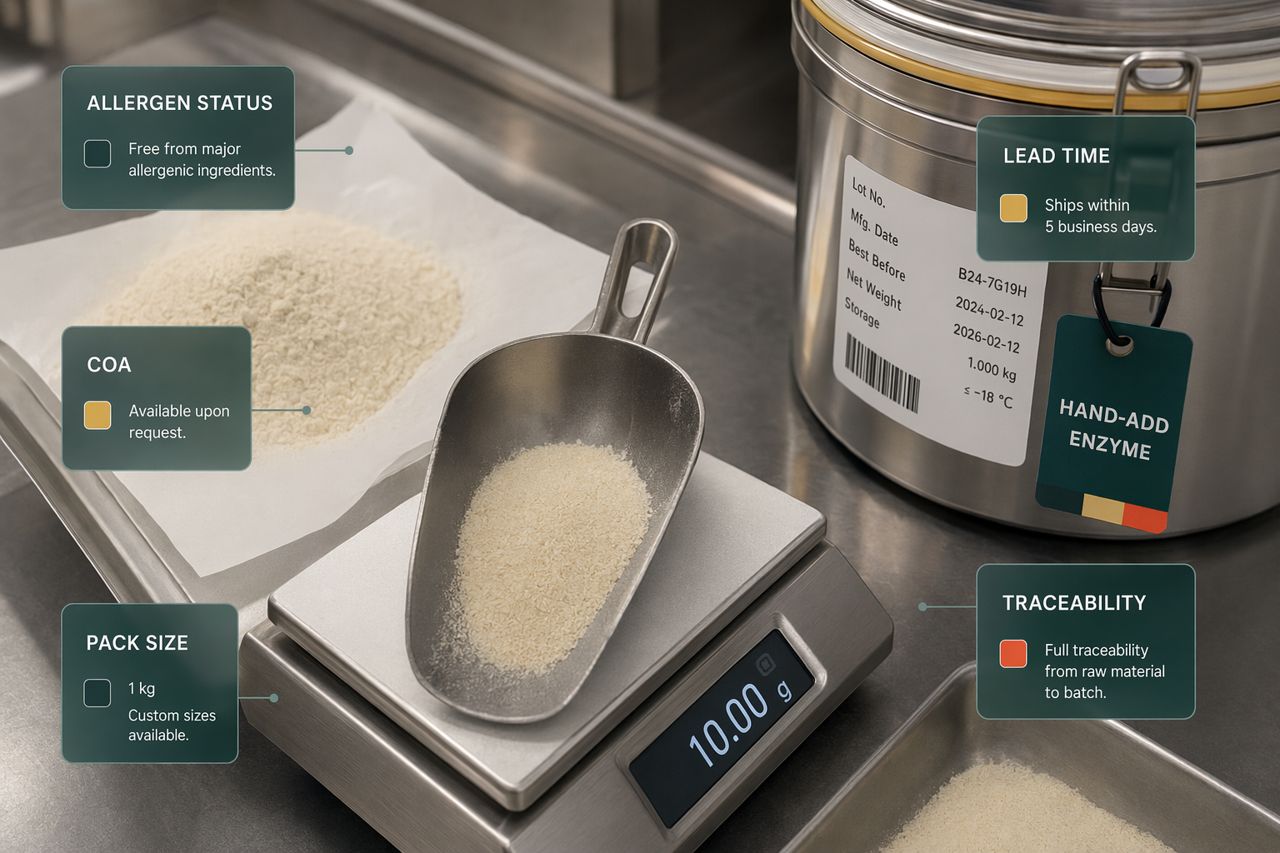
- hand-add stations for low-inclusion ingredients
- rework handling and staged WIP
- packaging hoppers and filling heads
Unlike liquid systems, powder residues can remain in seams, gaskets, dead spots, flexible connectors, and dust extraction paths. Fine particles may also migrate by air movement or operator handling. A clean-looking line is not always a controlled line.
The enzyme-specific layer: not just “another minor ingredient”
Food enzymes are typically used at low inclusion rates, but that does not make them low priority. For ingredient blenders, the main sourcing and operational questions are practical:
- Is the enzyme supplied in a physical form that fits the plant’s dust-control expectations?
- Does the carrier system align with customer allergen, dietary, and labeling requirements?
- Are lot documents consistent enough for rapid QA review?
- Is the supplier able to support repeatable pack sizes and pallet patterns?
- Are substitutions controlled, documented, and communicated before shipment?
- Can backup lots be reserved without creating specification drift?
The goal is not simply to buy enzyme powder in bulk. The goal is to buy a controlled input that behaves predictably in a contract blending environment.
Build a contamination risk matrix before material is approved
A practical premix risk matrix should include more than allergens. For every enzyme-containing ingredient, review:
1. Allergen and dietary status
Confirm the status of carriers, processing aids, and any blending aids. Documentation should be clear enough for your customer’s label review, not just your internal file.
Key documents may include:
- allergen statement
- gluten status statement, where relevant
- vegan, vegetarian, halal, kosher, or other program documents if required
- country-of-origin and manufacturing-site information
- GMO or non-GMO position statement where needed
2. Physical format and dust profile
Powder behavior affects both blending and cleaning. Compare fine powder, granulated, encapsulated, or coated formats based on your handling reality.
Ask whether the material is prone to:
- clinging to liners or scoop surfaces
- dusting during hand-add steps
- segregation during transfer
- buildup at discharge gates
- smearing or caking under humidity
- inconsistent flow through small hoppers
A slightly different physical format can reduce airborne migration, shorten cleaning time, and improve first-pass batch release.
3. Carrier and excipient compatibility
Many enzyme products are standardized onto food-grade carriers. Those carriers can affect customer acceptance, allergen risk, label language, and compatibility with other premix components.
Before approval, confirm whether the carrier system conflicts with:
- clean-label positioning
- sugar-free or low-carbohydrate formulations
- organic or natural claims
- allergen-sensitive customer programs
- application-specific color, flavor, or texture expectations
4. Lot-to-lot consistency
For contract blenders, inconsistency creates production questions: Does the next lot flow the same way? Does it disperse the same way? Will QA need extra review time? Will the customer accept the documentation?
Reliable bulk sourcing should include repeatable documentation and a clear process for changes in manufacturing site, carrier, physical format, specification band, or declared status.
Separate sourcing risk from production risk
Many cross-contamination failures are blamed on cleaning, but the root cause often begins earlier. A rushed substitution, a different carrier, an unexpected allergen statement, or a non-standard pack can disrupt a validated process.
Use two control layers:
Supplier approval controls
Before purchase, confirm:
- current specification sheet
- certificate of analysis format
- allergen and dietary statements
- SDS and safe-handling guidance
- lot traceability process
- shelf-life and storage requirements
- packaging configuration
- lead time and minimum order expectations
- change-notification policy
Production release controls
Before use, confirm:
- received lot matches the purchase order and approved specification
- containers are intact and correctly labeled
- COA and internal item code are matched
- allergen status aligns with the production schedule
- partial containers are resealed and identified
- staging area is compatible with the next scheduled run
This separation helps procurement, QA, and operations make faster decisions without bypassing controls.
Sequencing: the simplest control that is often underused
Production sequencing can reduce cleaning burden and prevent avoidable carryover. A typical approach is to move from lower-risk to higher-risk materials, then perform defined cleaning before returning to lower-risk programs.
For enzyme-containing premixes, sequencing should consider:
- allergen status
- color and flavor intensity
- dusting tendency
- inclusion rate
- customer sensitivity
- cleaning difficulty
- dedicated versus shared equipment
- packaging line compatibility
A well-built schedule protects the plant from unnecessary changeovers and protects customers from hidden carryover risk.
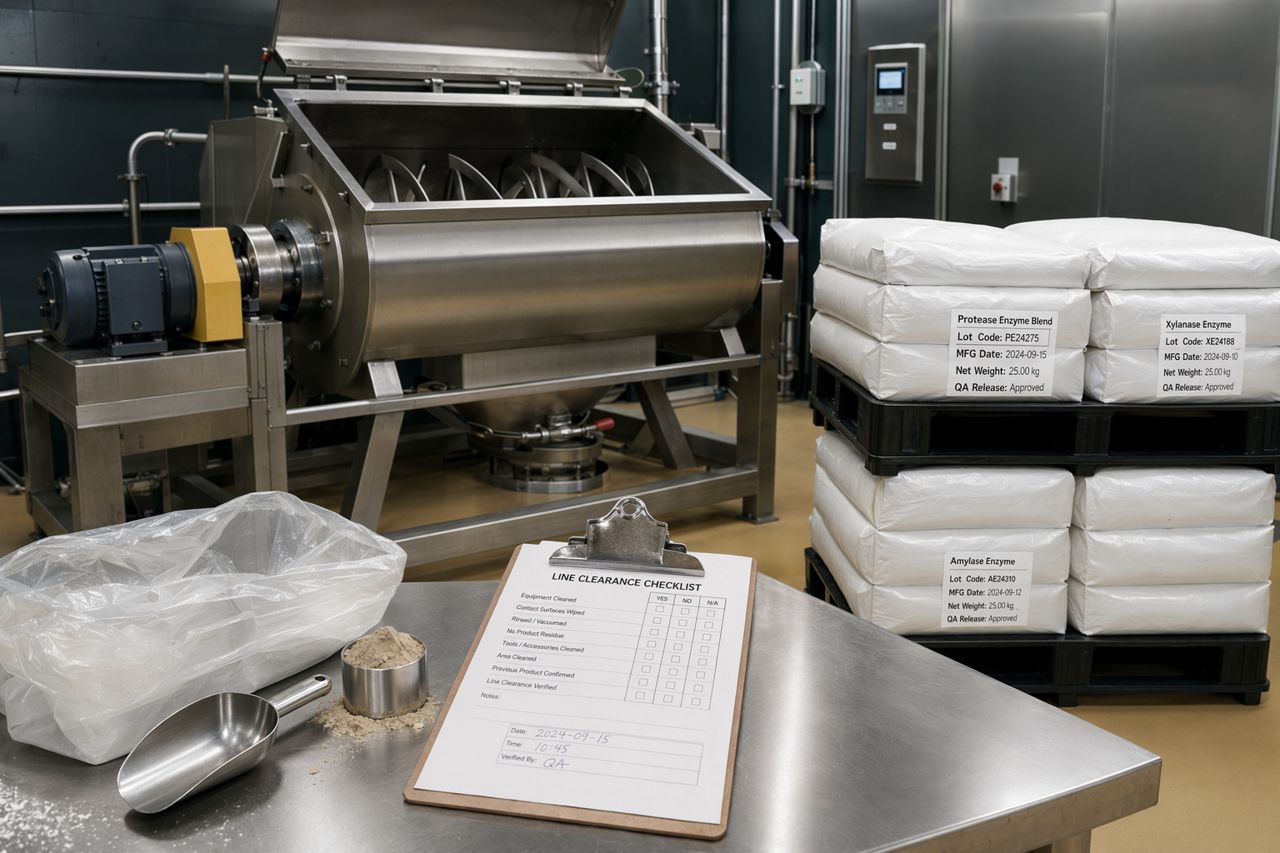
Line clearance should be documented, not assumed
For contract blenders, line clearance is a commercial proof point. Customers want evidence that the plant can manage shared equipment responsibly.
A strong line-clearance record includes:
- previous product and lot identification
- equipment inspected
- tools, scoops, screens, and magnets checked
- labels and packaging materials removed
- dust collection status confirmed
- cleaning method completed
- supervisor or QA signoff
- release time before the next batch
If enzyme powders are handled in the room, include transfer points, staging racks, and partially used containers in the inspection scope.
Cleaning validation: focus on residues, not appearance
Dry cleaning, vacuuming, wipe-down, wet cleaning, or hybrid methods may all be used depending on the plant and product. The point is consistency and verification.
A useful cleaning program defines:
- who cleans
- what is disassembled
- what tools are dedicated or shared
- which areas are inspected
- how residues are checked
- when QA releases the line
- how deviations are recorded
For powder premixes, pay particular attention to blender seals, end plates, discharge valves, flexible boots, dust socks, sieves, and hand-add stations.
Packaging and partial-container discipline
Cross-contamination can occur after blending if packaging materials or partial containers are poorly controlled.
Good practice includes:
- closed containers between weigh-up and use
- dedicated or cleaned scoops for sensitive materials
- clear labels on opened lots
- controlled return-to-stock procedures
- separation of allergen and non-allergen materials
- disposal rules for damaged liners or ambiguous residues
- reconciliation of high-value minor ingredients
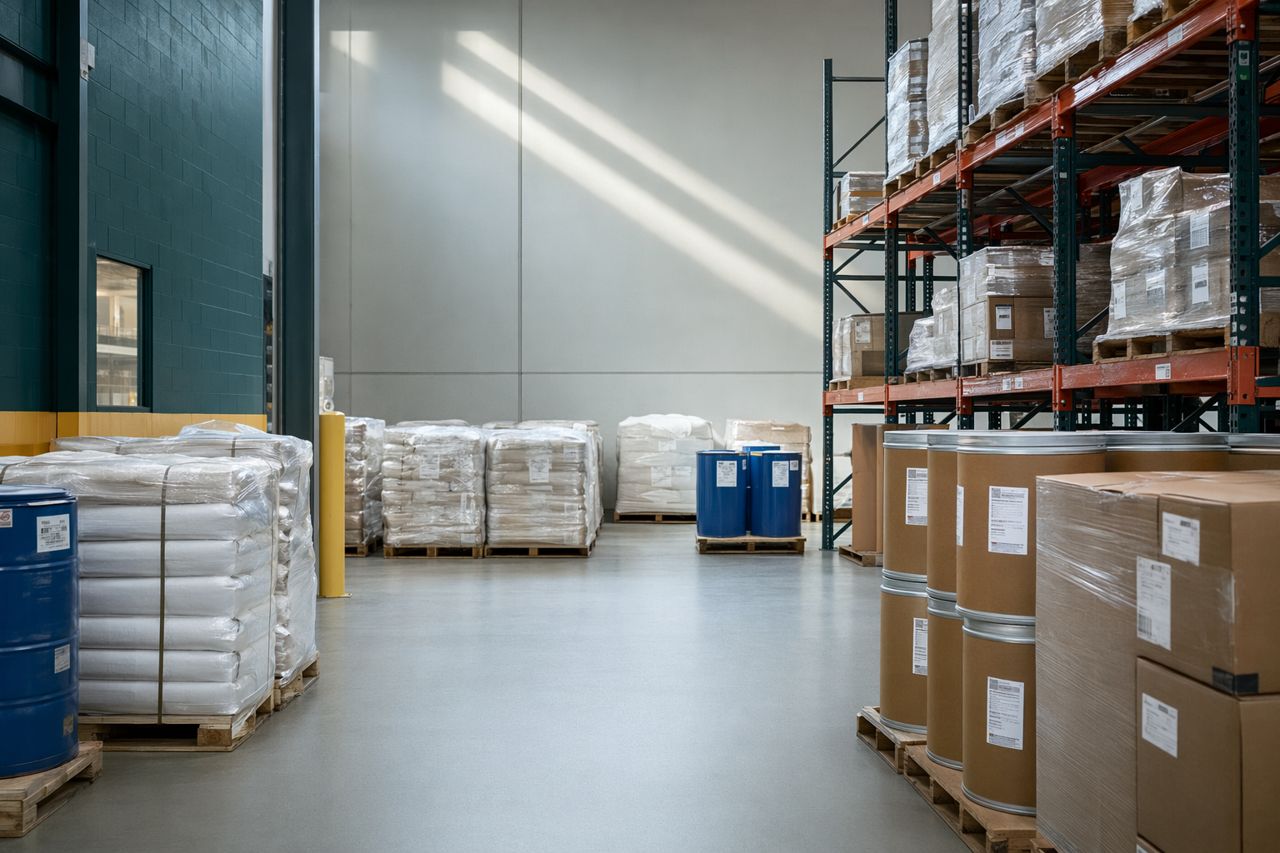
Bulk purchasing should support this discipline. Pack sizes should match realistic consumption rates so operators are not managing excessive partials across multiple production days.
Documentation that sourcing managers should request upfront
When buying food enzymes for premix production, documentation quality is part of product quality. Delayed or inconsistent paperwork can hold a batch even when inventory is physically available.
Request documentation that supports your actual customer file requirements, including:
- specification sheet
- COA by lot
- allergen statement
- dietary and certification documents where applicable
- shelf-life and storage statement
- country-of-origin information
- traceability confirmation
- change-control statement
- packaging and pallet configuration
- recommended handling precautions
The best supplier conversations happen before the urgent PO. That is when your team can align on approved alternates, reserved volume, and realistic lead times.
Managing substitution risk in enzyme sourcing
Substitution is one of the fastest ways to create cross-contamination or customer-approval problems. Even when two enzyme products serve the same application, they may differ in carrier, physical form, allergen position, manufacturing location, or documentation package.
Before accepting an alternate, ask:
- Does it match the approved specification and intended application?
- Are carrier and allergen statements equivalent?
- Will the customer need notification or approval?
- Does the pack size affect weigh-up or partial-container handling?
- Will the material flow and disperse similarly in the existing process?
- Can the supplier provide a COA and full document set before shipment?
- Is this a one-time emergency substitute or a controlled secondary source?
A lower unit price is not a savings if it creates a blocked lot, customer deviation, or relabeling event.
What BatchLoom helps sourcing teams control
BatchLoom supports ingredient blenders that need enzyme sourcing aligned with production realities, not just item availability. We focus on the factors that matter to procurement, QA, and operations:
- bulk food enzyme sourcing for contract blending programs
- lot-specific documentation and traceability support
- practical pack-size and lead-time alignment
- supplier approval support for recurring purchasing
- enzyme formats selected for blending, handling, and documentation fit
- controlled alternatives where customer approval and specification continuity matter
We understand that a blender’s risk is not limited to the ingredient cost. It includes the cost of downtime, QA holds, rushed substitutions, rejected paperwork, and customer confidence.
Buyer checklist: cross-contamination controls for enzyme premixes
Use this checklist when qualifying a new enzyme input or reviewing an existing program:
- Confirm allergen and dietary statements before first order.
- Match the physical format to plant dust-control expectations.
- Review carrier compatibility with customer label requirements.
- Define approved pack sizes to reduce partial-container risk.
- Align lot documentation with QA release workflow.
- Confirm change-notification expectations in writing.
- Sequence production based on allergen, dust, color, flavor, and cleaning burden.
- Include hand-add tools, sieves, magnets, and dust collection in line clearance.
- Verify cleaning by defined criteria, not visual confidence alone.
- Treat substitutions as controlled changes, not purchasing shortcuts.
Cleaner sourcing supports cleaner production
Cross-contamination prevention is a system: approved suppliers, disciplined receiving, controlled staging, smart sequencing, verified cleaning, and complete documentation. Enzyme sourcing sits inside that system.
When your enzyme input arrives with consistent specifications, clear lot records, suitable packaging, and no surprise declaration changes, the plant can run with fewer questions and fewer holds.
If you are reviewing a powder premix program or qualifying a new enzyme input, BatchLoom can help you align sourcing, documentation, and bulk supply planning around your production constraints.
Request a quote through the on-site form and tell us the enzyme type, intended application, preferred pack size, annual or campaign volume, documentation requirements, and target lead time.